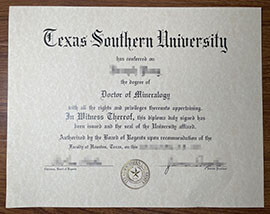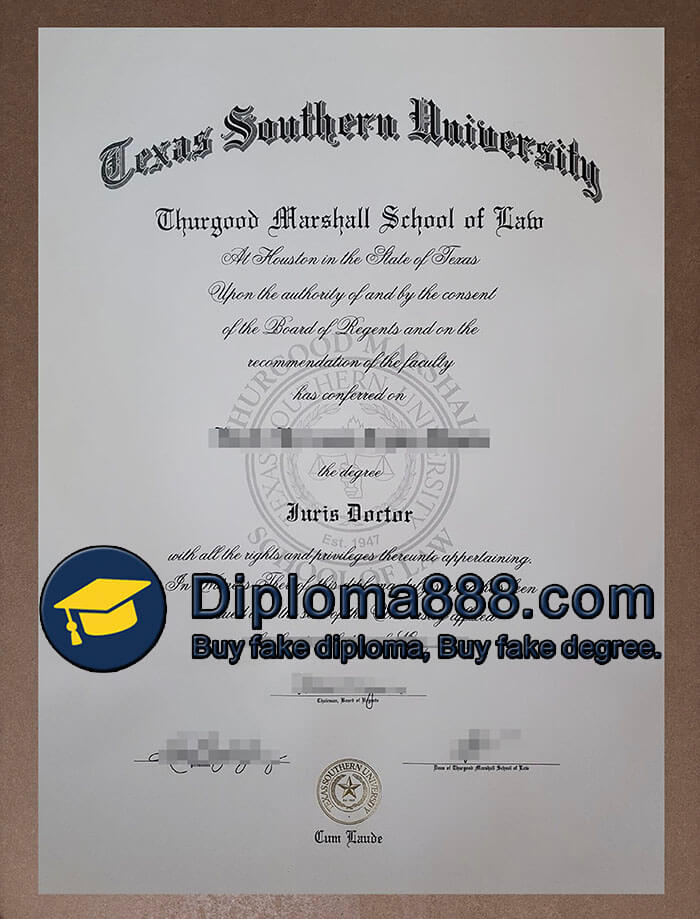
The Thurgood Marshall School of Law (TMSL) is part of Texas Southern University and is located in Houston, Texas; it was established in 1947. #Copy Thurgood Marshall School of Law degree. In 1978, Thurgood Marshall—by then a U.S. Supreme Court Justice—formally consented to the school bearing his name.
As a public law school, TMSL is fully accredited by the American Bar Association (ABA) and became a member of the Association of American Law Schools (AALS) in 2014. The school maintains a moderate student body size; for the 2025–2026 academic year, the acceptance rate was approximately 33%, and the yield rate was about 30.76%. Where to make a Thurgood Marshall School of Law diploma? Upholding the traditions of a Historically Black College or University (HBCU), the school’s mission emphasizes cultivating diverse leaders for the legal profession, business, and government, and it is recognized as one of the most diverse law schools in the United States.
Academic Strengths
TMSL’s curriculum centers on the Juris Doctor (JD) degree, requiring the completion of 90 credit hours for graduation. Order a Virginia Theological Seminary diploma. The first-year program utilizes small classes of five students and emphasizes foundational courses such as Contracts, Property, Torts, the Lawyering Process, and Civil Procedure. Starting in the second year, core courses—including Evidence, Constitutional Law, and Criminal Procedure—are introduced alongside experiential learning components like the Trial Simulation Practicum, which satisfy the ABA’s six-credit experiential education requirement.
Curriculum and Study Path
TMSL’s curriculum balances preparation for the bar exam with advanced professional study. Replica TMSL degree certificate online. To provide institutionalized academic support, the school requires students whose GPA falls below 3.0 at the end of their first year to take an additional course in Domestic Relations. Students must maintain a course load of at least 12 credits per semester to retain full-time status, with a maximum limit of 16 credits.
The school offers a diverse range of student organizations—such as the African Law Students Association (ALSA), the Asian Pacific American Law Students Association (APALSA), the Black Law Students Association (BLSA), and Black Men of Excellence (BME)—providing students from various backgrounds with a sense of cultural belonging and opportunities for professional networking. Additionally, the Cannabis Law Students Association (CLSA) reflects the school’s interest in emerging legal fields and its commitment to seeking justice for non-violent cannabis offenders.