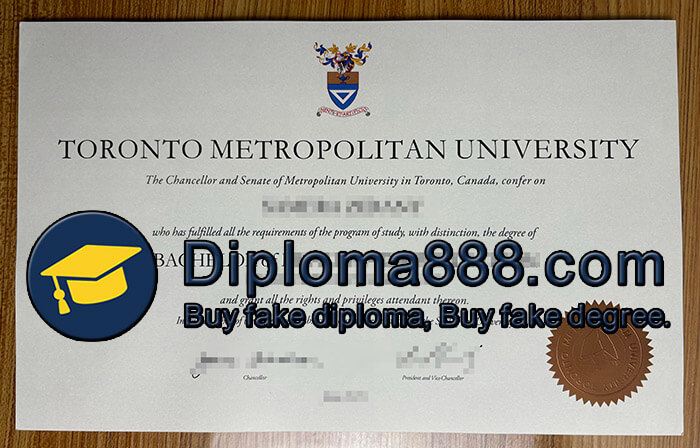
Founded in 1948 and officially renamed in 2022, Toronto Metropolitan University (TMU) is a public research university located in downtown Toronto, Ontario, Canada. #Copy Toronto Metropolitan University diploma. As the university with the largest number of undergraduate graduates in Canada, TMU operates on the principle of “learning by doing,” dedicated to closely integrating academic theory with real-world application. With over 80 languages spoken on campus and students hailing from more than 120 countries, the university fosters a highly diverse, inclusive, and international community.
TMU comprises multiple faculties offering a wide range of distinctive academic programs. Where to make a Toronto Metropolitan University degree? The Ted Rogers School of Management is one of Canada’s largest undergraduate business schools; programs such as Accounting and Finance, Business Management, and Business Technology Management offer paid co-op options, boasting an average employment rate of 96.6% and average earnings exceeding CAD $55,933 over a cumulative 16-month internship period.
TMU’s paid co-op program is a cornerstone of the university experience. Purchase a Red River College Polytechnic diploma. Approximately 4,500 students participate, matching annually with over 800 employers—including top international and Canadian firms such as IBM, PwC, Siemens, Rogers, Deloitte, RBC, and TD. Students can accumulate 16 to 20 months of full-time paid work experience before graduation, with about 93% of actively participating students successfully securing placements.
The co-op program spans dozens of majors across fields such as engineering, computer science, business, the arts, and community services. Replica Toronto Met diploma certificate. Students begin the application process after their first year, utilizing the co-op career preparation program to master skills such as job-search strategies, résumé optimization, and mock interviews. For instance, Sociology student Hailey Davidson discovered a new interest in human resources and law through an eight-month co-op placement and now plans to apply to law school.
Experiential learning is integrated across all disciplines, with 100% of full-time undergraduate programs incorporating practical opportunities. From laboratory research for biomedical students and a mandatory 240-hour internship for Creative Industries students to community field placements for Social Work students, learners engage with real-world professional environments from their very first year.